
Reading EWI m2 Rates Without Getting Misled by Cheap Headline Prices
A price per square metre can seem like the easiest way to compare external wall insulation. One installer gives you…

Why you can trust our content
At a glance
A price per square metre can seem like the easiest way to compare external wall insulation. One installer gives you a low figure, another provides a higher rate, and it may appear obvious which quotation offers better value.
The problem is that a square metre rate does not always include the same things. One installer may include preparation, scaffolding and the final render, while another may price some of these separately.
For homeowners researching EWI Birmingham cost figures, understanding what sits behind the rate is therefore essential. A low headline price is only useful when you know exactly what it covers.
What Does an EWI m2 Rate Actually Mean?
An EWI square metre rate generally refers to the cost associated with insulating a specified area of external wall.
However, the exact contents of that rate can vary considerably.
Depending on the quotation, it might include some or all of the following:
- Insulation material
- Adhesive
- Mechanical fixings
- Basecoat
- Reinforcement mesh
- Primer
- Final render
- Installation labour
- Scaffolding
- Surface preparation
- Window detailing
- Waste removal
This means two apparently similar rates may represent very different packages.
Before comparing prices, ask the installer to explain precisely what is included in the m2 figure.
Why Can a Cheap m2 Rate Be Misleading?
A low rate is not necessarily a bad rate. It may simply represent a narrower scope.
For example, one installer could quote for insulation and basic installation only, while another includes preparation, scaffolding and the final decorative finish.
The second quotation may appear more expensive when viewed as a square metre figure, even though it includes considerably more work.
This is why EWI Birmingham cost comparisons should focus on the completed project rather than the cheapest advertised rate.
Internal link suggestion: (Link to related blog: External Wall Insulation Cost Planning: What to Budget Before Work Starts)
What Should Be Included in the Price Per Square Metre?
There is no universal list that every installer must use, but homeowners should be able to establish what their quoted rate covers.
Ask whether the rate includes:
| Cost element | Included? |
| Insulation boards or material | Check |
| Adhesive | Check |
| Mechanical fixings | Check |
| Basecoat | Check |
| Reinforcement mesh | Check |
| Primer | Check |
| Final render | Check |
| Installation labour | Check |
| Scaffolding | Check |
| Surface preparation | Check |
| Window detailing | Check |
| Waste removal | Check |
You can use this simple table when comparing quotations.
If one installer has left several boxes outside the quoted m2 rate, a direct comparison may not be meaningful.
Does the Insulation Material Affect the m2 Rate?
Yes. Different insulation materials and systems can have different material costs and installation requirements.
The correct choice should be based on the building and the desired performance rather than simply selecting the cheapest material.
Factors that may influence the specification include:
- Existing wall construction
- Required thermal performance
- Wall condition
- Moisture considerations
- Insulation thickness
- Window and door positions
- Roofline details
- Desired render finish
A professional quotation should explain why the proposed system is appropriate for the property.
Does Insulation Thickness Change the Price?
It can. Thicker insulation generally requires more material and may affect detailing around windows, doors and roof edges.
However, choosing a thickness simply because it has a particular price per square metre does not necessarily make sense.
The specification should consider the building’s existing construction and the overall thermal objective.
For homeowners comparing EWI birmingham cost per m2 figures, it is therefore useful to ask both what insulation is being used and how thick it will be.
[CTA 1]
If you have seen different m2 rates and are unsure how to compare them, Vaca Services Ltd can discuss the proposed specification and help you understand what the quoted figure actually represents.
Are Scaffolding Costs Included?
Not always.
Scaffolding can be a significant project cost, particularly for two-storey properties or homes with difficult access.
If scaffolding is excluded from the m2 rate, you need to add it to the overall project budget before comparing quotations.
Ask:
- Is scaffolding included?
- How long is the hire period?
- Does the price include erection and dismantling?
- Are adaptations included?
- Is access to every required elevation covered?
A cheap rate that excludes scaffolding can become much less competitive once access costs are added.
What About Wall Preparation?
Preparation is another common difference between quotations.
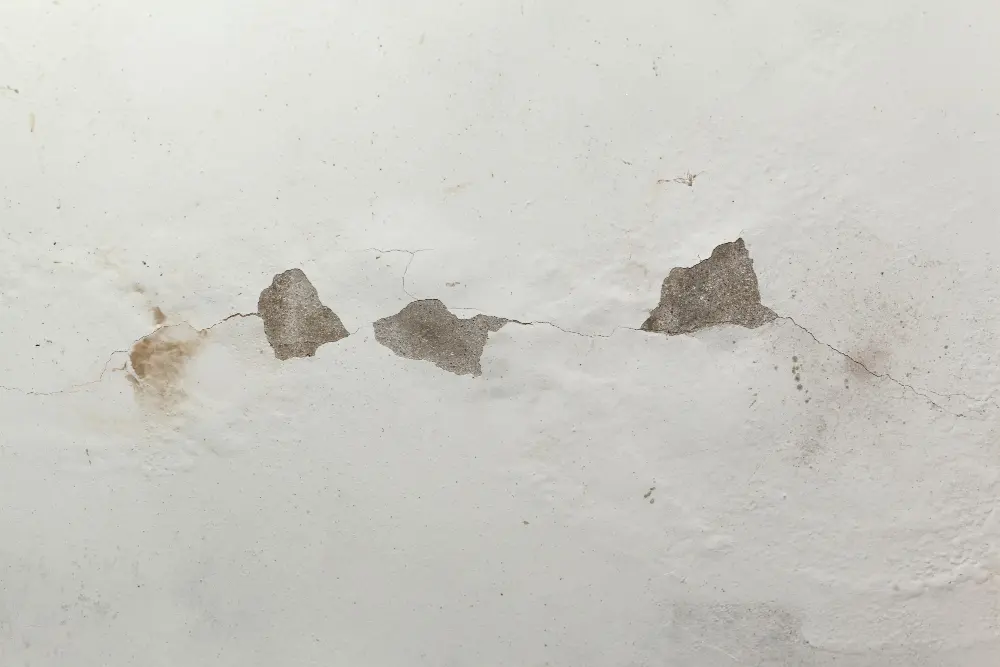
If the existing wall has sound render and requires little preparation, the installation may be relatively straightforward. If there is loose render, damaged masonry or other defects, additional work may be required.
Preparation could involve:
- Removing loose material
- Repairing cracks
- Replacing damaged masonry
- Cleaning surfaces
- Treating unsuitable coatings
- Addressing moisture sources
When reviewing EWI cost Birmingham proposals, ask whether standard preparation is included and what happens if more substantial repairs are discovered.
Internal link suggestion: (Link to related blog: Scaffolding, Access and Wall Condition: The Hidden Drivers of EWI Pricing)
Can Windows and Doors Increase the Effective Cost?
Yes. Windows and doors reduce the amount of wall surface being insulated, but they also create areas that need careful detailing.
An installer may need to account for:
- Extended sills
- Window reveals
- Corner protection
- Door surrounds
- Flashings
- Finishing around frames
A property with many windows can therefore require more labour and detailing than a simple building with fewer openings.
This is another reason why applying a m2 rate to the net wall area does not always tell you the full project cost.
How Does the Building Shape Affect the Price?
A simple rectangular house is generally easier to insulate than a property with multiple projections and corners.
Features such as:
- Bay windows
- Porches
- Gables
- Extensions
- Recessed entrances
- Conservatories
- Multiple roof levels
can all increase the complexity of installation.
The total wall area might be similar, but the labour required to complete the detailing can be very different.
What Does “Fully Installed” Actually Mean?
Be careful with phrases such as “fully installed” unless the quotation defines them.
The phrase could mean that the insulation and render are installed, but it may not necessarily include every preparation or access cost.
Ask for a written breakdown covering the complete scope.
A useful quotation should tell you:
- What insulation system is being installed?
- What thickness is proposed?
- What preparation is included?
- Is scaffolding included?
- What finish is included?
- How are windows and doors treated?
- What happens to pipes and cables?
- What is excluded?
- How are variations handled?
- Is VAT included?
The answers matter more than the wording used to describe the price.
How Should You Compare Two m2 Rates?
The simplest approach is to convert both quotations into comparable totals.
For each installer, record:
Net insulated area + insulation specification + preparation + scaffolding + detailing + finish + additional works = realistic project cost
This approach helps prevent the headline m2 figure from dominating your decision.
For example, an installer offering a lower rate may have separate charges for scaffolding and window detailing. Another installer may include those elements in the quoted rate.
The second quotation could therefore offer better overall value despite having a higher headline figure.
Why Does the Survey Matter?
The final cost cannot be understood properly without considering the property.
A survey can identify:
- Wall construction
- Existing surface condition
- Damp or drainage problems
- Access restrictions
- Window and door details
- External services
- Roofline requirements
- Complex elevations
This information helps the installer calculate the actual scope.
For homeowners comparing EWI birmingham cost per m2 rates, a site-specific assessment provides a much stronger basis for comparison than generic online prices.
[CTA 2]
Vaca Services Ltd can assess the property and explain the main elements included in a proposed external insulation project. Speak to the team if you want to compare costs on a like-for-like basis.
A Typical Quote Comparison
Imagine two Birmingham homeowners receive quotations for similar semi-detached properties.
Installer A quotes a low m2 rate but lists scaffolding, preparation and window detailing as separate costs.
Installer B provides a higher m2 rate but includes the insulation system, preparation, scaffolding, standard window detailing and final render.
At first glance, Installer A looks cheaper. Once the additional items are included, however, the difference may be much smaller.
This example shows why the lowest headline rate should not automatically be treated as the best deal.
Internal link suggestion: (Link to related blog: Before You Accept an EWI Quote: Questions That Prevent Costly Surprises)
What Are the Warning Signs of an Unrealistically Low Rate?
A low price should prompt questions rather than an automatic rejection.
Look more closely if:
- The insulation specification is unclear
- The quoted thickness is not stated
- Scaffolding is excluded
- Preparation is not explained
- The render finish is vague
- Window detailing is not mentioned
- External fixtures are ignored
- There are numerous exclusions
- The installer has not surveyed the property
A low quote can still be genuine, but you need to understand how it has been calculated.
Related articles

What type of service do you need?

External Wall Insulation System
(Includes Silicone Render)

Silicone Render Only
At a glance
A price per square metre can seem like the easiest way to compare external wall insulation. One installer gives you a low figure, another provides a higher rate, and it may appear obvious which quotation offers better value.
The problem is that a square metre rate does not always include the same things. One installer may include preparation, scaffolding and the final render, while another may price some of these separately.
For homeowners researching EWI Birmingham cost figures, understanding what sits behind the rate is therefore essential. A low headline price is only useful when you know exactly what it covers.
What Does an EWI m2 Rate Actually Mean?
An EWI square metre rate generally refers to the cost associated with insulating a specified area of external wall.
However, the exact contents of that rate can vary considerably.
Depending on the quotation, it might include some or all of the following:
- Insulation material
- Adhesive
- Mechanical fixings
- Basecoat
- Reinforcement mesh
- Primer
- Final render
- Installation labour
- Scaffolding
- Surface preparation
- Window detailing
- Waste removal
This means two apparently similar rates may represent very different packages.
Before comparing prices, ask the installer to explain precisely what is included in the m2 figure.
Why Can a Cheap m2 Rate Be Misleading?
A low rate is not necessarily a bad rate. It may simply represent a narrower scope.
For example, one installer could quote for insulation and basic installation only, while another includes preparation, scaffolding and the final decorative finish.
The second quotation may appear more expensive when viewed as a square metre figure, even though it includes considerably more work.
This is why EWI Birmingham cost comparisons should focus on the completed project rather than the cheapest advertised rate.
Internal link suggestion: (Link to related blog: External Wall Insulation Cost Planning: What to Budget Before Work Starts)
What Should Be Included in the Price Per Square Metre?
There is no universal list that every installer must use, but homeowners should be able to establish what their quoted rate covers.
Ask whether the rate includes:
| Cost element | Included? |
| Insulation boards or material | Check |
| Adhesive | Check |
| Mechanical fixings | Check |
| Basecoat | Check |
| Reinforcement mesh | Check |
| Primer | Check |
| Final render | Check |
| Installation labour | Check |
| Scaffolding | Check |
| Surface preparation | Check |
| Window detailing | Check |
| Waste removal | Check |
You can use this simple table when comparing quotations.
If one installer has left several boxes outside the quoted m2 rate, a direct comparison may not be meaningful.
Does the Insulation Material Affect the m2 Rate?
Yes. Different insulation materials and systems can have different material costs and installation requirements.
The correct choice should be based on the building and the desired performance rather than simply selecting the cheapest material.
Factors that may influence the specification include:
- Existing wall construction
- Required thermal performance
- Wall condition
- Moisture considerations
- Insulation thickness
- Window and door positions
- Roofline details
- Desired render finish
A professional quotation should explain why the proposed system is appropriate for the property.
Does Insulation Thickness Change the Price?
It can. Thicker insulation generally requires more material and may affect detailing around windows, doors and roof edges.
However, choosing a thickness simply because it has a particular price per square metre does not necessarily make sense.
The specification should consider the building’s existing construction and the overall thermal objective.
For homeowners comparing EWI birmingham cost per m2 figures, it is therefore useful to ask both what insulation is being used and how thick it will be.
[CTA 1]
If you have seen different m2 rates and are unsure how to compare them, Vaca Services Ltd can discuss the proposed specification and help you understand what the quoted figure actually represents.
Are Scaffolding Costs Included?
Not always.
Scaffolding can be a significant project cost, particularly for two-storey properties or homes with difficult access.
If scaffolding is excluded from the m2 rate, you need to add it to the overall project budget before comparing quotations.
Ask:
- Is scaffolding included?
- How long is the hire period?
- Does the price include erection and dismantling?
- Are adaptations included?
- Is access to every required elevation covered?
A cheap rate that excludes scaffolding can become much less competitive once access costs are added.
What About Wall Preparation?
Preparation is another common difference between quotations.
If the existing wall has sound render and requires little preparation, the installation may be relatively straightforward. If there is loose render, damaged masonry or other defects, additional work may be required.
Preparation could involve:
- Removing loose material
- Repairing cracks
- Replacing damaged masonry
- Cleaning surfaces
- Treating unsuitable coatings
- Addressing moisture sources
When reviewing EWI cost Birmingham proposals, ask whether standard preparation is included and what happens if more substantial repairs are discovered.
Internal link suggestion: (Link to related blog: Scaffolding, Access and Wall Condition: The Hidden Drivers of EWI Pricing)
Can Windows and Doors Increase the Effective Cost?
Yes. Windows and doors reduce the amount of wall surface being insulated, but they also create areas that need careful detailing.
An installer may need to account for:
- Extended sills
- Window reveals
- Corner protection
- Door surrounds
- Flashings
- Finishing around frames
A property with many windows can therefore require more labour and detailing than a simple building with fewer openings.
This is another reason why applying a m2 rate to the net wall area does not always tell you the full project cost.
How Does the Building Shape Affect the Price?
A simple rectangular house is generally easier to insulate than a property with multiple projections and corners.
Features such as:
- Bay windows
- Porches
- Gables
- Extensions
- Recessed entrances
- Conservatories
- Multiple roof levels
can all increase the complexity of installation.
The total wall area might be similar, but the labour required to complete the detailing can be very different.
What Does “Fully Installed” Actually Mean?
Be careful with phrases such as “fully installed” unless the quotation defines them.
The phrase could mean that the insulation and render are installed, but it may not necessarily include every preparation or access cost.
Ask for a written breakdown covering the complete scope.
A useful quotation should tell you:
- What insulation system is being installed?
- What thickness is proposed?
- What preparation is included?
- Is scaffolding included?
- What finish is included?
- How are windows and doors treated?
- What happens to pipes and cables?
- What is excluded?
- How are variations handled?
- Is VAT included?
The answers matter more than the wording used to describe the price.
How Should You Compare Two m2 Rates?
The simplest approach is to convert both quotations into comparable totals.
For each installer, record:
Net insulated area + insulation specification + preparation + scaffolding + detailing + finish + additional works = realistic project cost
This approach helps prevent the headline m2 figure from dominating your decision.
For example, an installer offering a lower rate may have separate charges for scaffolding and window detailing. Another installer may include those elements in the quoted rate.
The second quotation could therefore offer better overall value despite having a higher headline figure.
Why Does the Survey Matter?
The final cost cannot be understood properly without considering the property.
A survey can identify:
- Wall construction
- Existing surface condition
- Damp or drainage problems
- Access restrictions
- Window and door details
- External services
- Roofline requirements
- Complex elevations
This information helps the installer calculate the actual scope.
For homeowners comparing EWI birmingham cost per m2 rates, a site-specific assessment provides a much stronger basis for comparison than generic online prices.
[CTA 2]
Vaca Services Ltd can assess the property and explain the main elements included in a proposed external insulation project. Speak to the team if you want to compare costs on a like-for-like basis.
A Typical Quote Comparison
Imagine two Birmingham homeowners receive quotations for similar semi-detached properties.
Installer A quotes a low m2 rate but lists scaffolding, preparation and window detailing as separate costs.
Installer B provides a higher m2 rate but includes the insulation system, preparation, scaffolding, standard window detailing and final render.
At first glance, Installer A looks cheaper. Once the additional items are included, however, the difference may be much smaller.
This example shows why the lowest headline rate should not automatically be treated as the best deal.
Internal link suggestion: (Link to related blog: Before You Accept an EWI Quote: Questions That Prevent Costly Surprises)
What Are the Warning Signs of an Unrealistically Low Rate?
A low price should prompt questions rather than an automatic rejection.
Look more closely if:
- The insulation specification is unclear
- The quoted thickness is not stated
- Scaffolding is excluded
- Preparation is not explained
- The render finish is vague
- Window detailing is not mentioned
- External fixtures are ignored
- There are numerous exclusions
- The installer has not surveyed the property
A low quote can still be genuine, but you need to understand how it has been calculated.
Related articles
What type of service do you need?
External Wall Insulation System
(Includes Silicone Render)
Silicone Render Only


